Battery Storage: A Smarter Way to Reduce Rising Energy Costs
July 6, 2026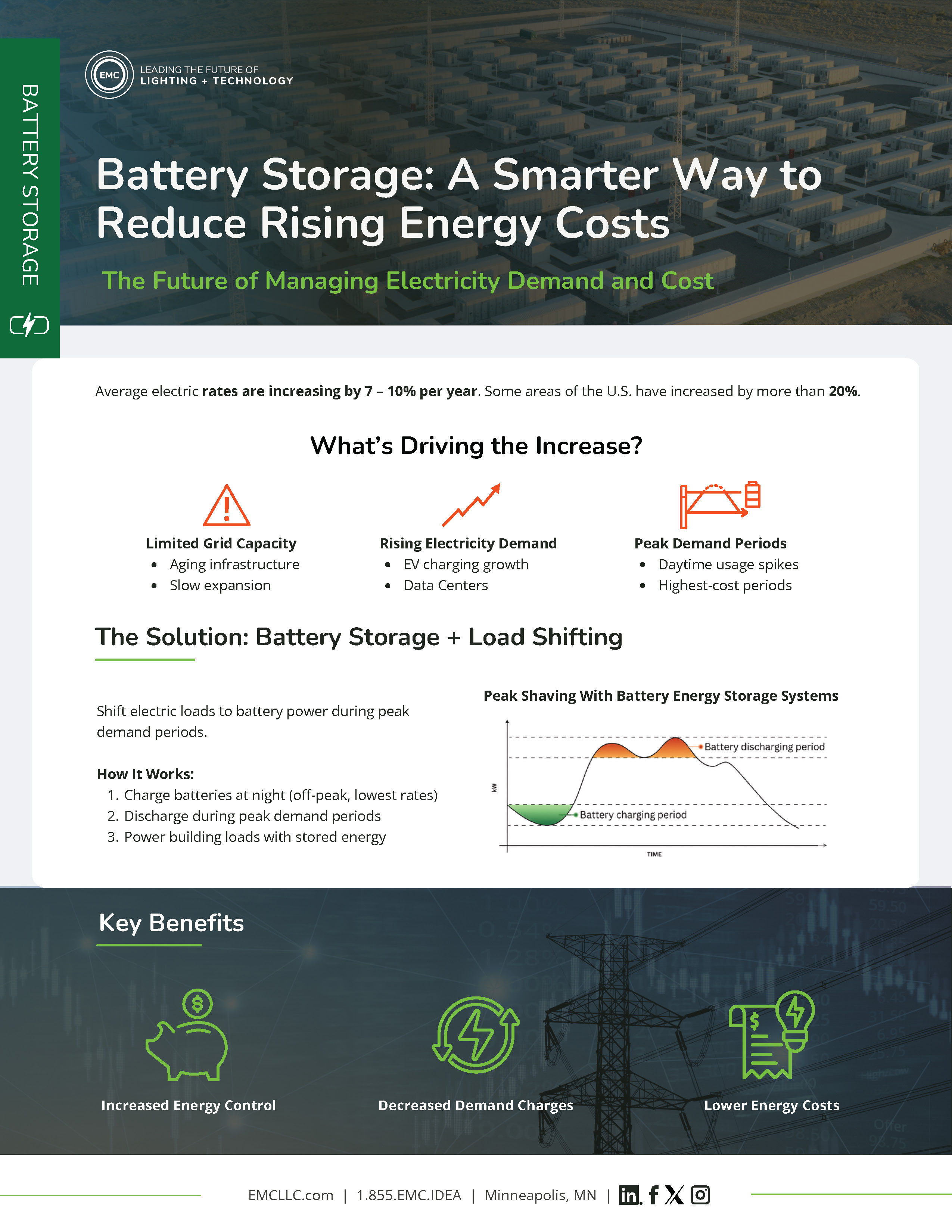
Download 1-Pager
Cut Your Peak Demand Charges
Your electricity bill has two components. One is energy consumption. The other is demand charges. Demand charges can represent 30 to 70% of total electricity costs.
Peak demand charges are based on your single highest hour of electricity usage during the month. Hit 500 kW for even one hour and you pay demand charges on 500 kW for the entire month. That one peak hour drives your entire month's costs.
This is where battery storage changes the equation.
How Battery Storage Reduces Peak Demand
Dispatch Energy During Peak Hours: Battery systems charge during off-peak hours when electricity is cheaper. During peak usage periods, they discharge stored energy to reduce the power you pull from the grid. Your peak demand drops. Your monthly charges drop with it.
Shift Consumption Patterns: Working with smart building controls, battery systems automatically identify and smooth out demand spikes. Lighting, HVAC and other systems adjust automatically. The grid sees lower peak demand. Your bill reflects the savings.
Offset Variable Demand: Grid demand is becoming increasingly volatile. Summer heat waves spike AC usage. Winter cold drives heating loads. Unexpected operations push systems harder. Battery storage absorbs these spikes so your demand profile stays consistent and low.
The Financial Reality
Peak demand charges are rising faster than energy consumption rates. Data centers, AI computing and manufacturing are driving unprecedented grid stress. Utilities are passing costs to customers through higher demand rates. The U.S. Energy Information Administration projects natural gas reserves will drop 4% in 2025 and 3% in 2026, while consumption climbs. When reserves drop and demand rises, electricity prices spike, particularly during peak usage periods.
Battery storage hedges this risk. By reducing your peak demand, you insulate your business from these escalating charges.
Battery Storage + Smart Controls = Maximum Savings
Battery storage works best when paired with smart building controls. Controls give systems visibility into demand patterns, predict usage spikes and trigger battery discharge automatically. Lighting dims, HVAC adjusts, charging stations pause briefly. The battery discharges to fill the gap. Peak demand stays low. Savings multiply.
EMC integrates battery storage into your existing smart building infrastructure. Your lighting, HVAC, EV charging and battery system all work together through a single management platform.