Battery Storage: The Smartest Way To Reduce Rising Energy Costs?
May 15, 2026
Average electric rates are increasing by 7-10% per year and, in some areas of the U.S., rates have increased by more than 20%. Three factors are driving that increase:
- Limited grid capacity
The electrical grid infrastructure is aging, often dangerously close to collapse in some areas. And any attempts to expand the size and reach of the grid have been slowed by financial issues and community resistance. The majority of the current grid was constructed to handle more predictable, 20th century usage patterns.
- Increasing demand for electricity
Demand for electricity is on the rise. Commercial demand continues to increase for several reasons including the shift to electrification and the growth of data centers.
- Most consumption occurs during peak demand periods
Electrical usage tends to spike during the day when people are at work. The demand peaks are especially high during the height of the summer when air conditioning use spikes.
Battery Storage Shifts Load To Off-peak Times
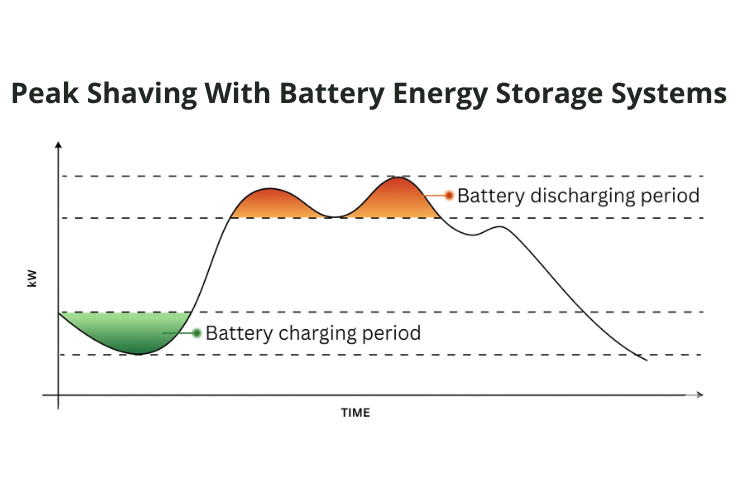
Moving more electrical consumption to nighttime hours—off-peak hours when the rates are lower—and charging storage batteries during that time, we can:
- Significantly lower energy costs
- Shifting to nighttime hours reduces the cost per kWh
- Decrease demand charges
- If a building is charged by Time of Day rates, rates are lower at night
- Increase our control of the energy grid
- Shifting demand to nighttime lessens the strain on the electrical grid
 What kind of payback is possible?
Here’s an example of how much an EMC audit helped a national Big Box retailer save at their San Diego location:
The Challenge:
September 2025 electric bill was $34,000 ($22,000 demand charge/$12,000 usage)
The Solution:
Shift 20 kW of their lighting load to battery storage.
The Result:
The client saved approximately $18,000 on annual demand which delivered approximately $3,000 savings on annual energy costs
That’s a total savings of $21,000 — and that produced payback in less than 3.5 years.
Are there more potential ways to save using battery storage?
Additional financial levers are available to help you save when you convert to battery storage:
- Utility incentives
- Some utilities (primarily California based) will provide limited incentives for storage-only projects
- Modified Accelerated Cost Recovery System (MACRS)
- Storage projects qualify for accelerated depreciation
- Typically equal to tax rate times project basis
- Reduced if project qualifies for Investment Tax Credit
- Investment Tax Credit (ITC)
- Anticipate most projects will qualify starting in 2027
- Some restrictions went into effect on January 1, 2026
- ITC is worth 30% on project basis
EMC is here to help you figure it all out.
EMC helps building portfolio owners assess energy efficiency and building control retrofit options and set site priorities, which can reduce costs and risks.
Contact EMC for more information about how we can help you with your plan to deal with the ever-changing energy landscape.